Understanding the Shih Tzu 3D Layered Outline: A New Dimension in Design and Creativity
In the ever-evolving landscape of design, technology, and creative industries, new tools and formats are constantly emerging to meet the growing demands of professionals and enthusiasts alike. One such innovation that has been gaining attention is the Shih Tzu 3D Layered Outline. This unique format offers a fresh approach to visual representation, blending artistic precision with technical versatility. Whether you're a designer, marketer, entrepreneur, or creative professional, understanding the significance of the Shih Tzu 3D Layered Outline can open up new possibilities for your work.
What Is the Shih Tzu 3D Layered Outline?
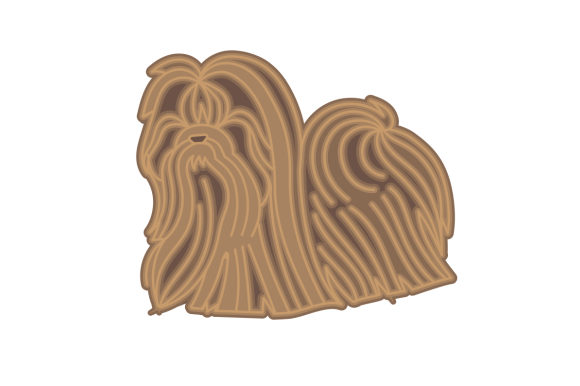
The Shih Tzu 3D Layered Outline is a digital file format that represents a three-dimensional object through a series of layered outlines. Unlike traditional 3D models that rely on solid geometry, this format focuses on the outer contours and structural layers of an object, allowing for greater flexibility in rendering and manipulation. The term "Shih Tzu" here is not related to the dog breed but rather serves as a conceptual name for this innovative design approach, emphasizing its intricate, multi-layered structure.
This format is available in multiple file types, including SVG (Scalable Vector Graphics), Transparent PNG, EPS (Encapsulated PostScript), and DXF (Drawing Exchange Format). Each of these formats caters to different use cases, from graphic design and web development to engineering and manufacturing. The ability to export and import the Shih Tzu 3D Layered Outline across platforms makes it a valuable asset for cross-disciplinary collaboration.
How It Fits Into Broader Industry Trends
The rise of the Shih Tzu 3D Layered Outline aligns with several key trends shaping today’s creative and technological landscape. As businesses and individuals seek more efficient and adaptable tools, the demand for flexible, scalable, and high-quality digital assets has never been higher. This format meets those needs by offering a balance between detail and performance, making it ideal for projects that require both precision and speed.
In the realm of graphic design, the Shih Tzu 3D Layered Outline provides designers with a way to create complex visuals without the computational overhead of full 3D modeling. For web developers, it offers a lightweight alternative to traditional 3D models, improving load times and user experience. In manufacturing and prototyping, the format allows for accurate representations that can be used in CAD software or 3D printing workflows.
Moreover, the trend toward personalization and customization in consumer products has made layered outlines increasingly relevant. By breaking down an object into distinct layers, creators can easily modify individual components, enabling tailored designs that cater to specific user preferences. This level of adaptability is particularly valuable in industries such as fashion, interior design, and product development.
Why People Are Paying Attention to the Shih Tzu 3D Layered Outline
The growing interest in the Shih Tzu 3D Layered Outline stems from its ability to address real-world challenges faced by professionals across various fields. As the pace of innovation accelerates, there is a clear need for tools that can keep up with evolving workflows and expectations. The Shih Tzu 3D Layered Outline offers a solution that is both practical and forward-thinking.
One reason for its popularity is its compatibility with modern design software. Many industry-standard tools now support the import and export of layered outline files, allowing for seamless integration into existing projects. This compatibility ensures that users can leverage the format without disrupting their current processes, making it an attractive option for teams already invested in digital design ecosystems.
Additionally, the visual clarity provided by the Shih Tzu 3D Layered Outline sets it apart from other formats. By focusing on the outline and structure of an object, it maintains a clean and precise appearance, which is essential for branding, marketing, and editorial content. This clarity also makes it easier to scale and adapt designs for different mediums, from print to digital screens.
Changing Needs and Preferences in the Creative Industry
As the creative industry continues to evolve, so too do the expectations of professionals and consumers. There is a growing emphasis on efficiency, scalability, and adaptability, all of which the Shih Tzu 3D Layered Outline supports. In a world where time and resources are limited, having access to a format that simplifies complex tasks is a significant advantage.
For instance, freelancers and small businesses often face constraints when it comes to accessing high-end 3D modeling software. The Shih Tzu 3D Layered Outline provides an accessible alternative that doesn’t require advanced technical skills or expensive tools. This democratization of design empowers a wider range of creators to produce high-quality work, regardless of their background or budget.
Another factor driving the relevance of the Shih Tzu 3D Layered Outline is the shift toward interactive and immersive experiences. With the rise of augmented reality (AR) and virtual reality (VR), there is a need for assets that can be easily integrated into dynamic environments. The layered nature of the Shih Tzu 3D Outline allows for quick adjustments and optimizations, making it well-suited for these emerging technologies.
Practical Examples and Observations
Let’s take a closer look at how the Shih Tzu 3D Layered Outline is being used in real-world scenarios. In the field of branding and packaging design, companies are using this format to create detailed product mockups that can be easily modified for different markets or campaigns. The ability to isolate and adjust individual layers enables brands to maintain consistency while adapting to local preferences.
In education and e-learning, the Shih Tzu 3D Layered Outline is proving to be a valuable tool for visualizing complex concepts. Teachers and instructional designers can break down objects into their component parts, making abstract ideas more tangible for students. This application is particularly useful in STEM education, where visual learning plays a crucial role.
For marketing and advertising, the format is being used to create eye-catching visuals that stand out in crowded digital spaces. By maintaining a clean and structured appearance, the Shih Tzu 3D Layered Outline helps brands communicate their message more effectively, whether in social media posts, email campaigns, or online ads.
Connecting to Larger Developments
The Shih Tzu 3D Layered Outline is not just a standalone tool—it is part of a broader movement toward more intelligent and versatile digital assets. As industries continue to embrace automation, AI, and data-driven decision-making, the need for adaptable and scalable design elements becomes even more critical. The Shih Tzu 3D Layered Outline aligns with this vision by providing a format that can evolve alongside changing technologies and user needs.
Furthermore, the trend toward sustainability and efficiency in design and production is another area where the Shih Tzu 3D Layered Outline shines. By reducing the complexity of 3D models and streamlining workflows, it contributes to more resource-efficient processes. This is especially important in industries where waste and inefficiency have long been a concern.
As we look ahead, the Shih Tzu 3D Layered Outline is likely to play an even greater role in shaping the future of design and technology. Its ability to bridge the gap between artistic expression and technical precision makes it a powerful tool for professionals who want to stay ahead of the curve.